IoT presents a number of technical challenges. Here’s how cloud computing helps solve them.
Distinctively two separate technologies, the Internet of Things (IoT) and cloud computing are closely associated. When the two are combined, they deliver powerful innovation that will continue to alter how we interact with our devices and with one another, and change how we store, manage and consume information. IoT can potentially transform your business by allowing you to develop smarter products and services, collect data that will influence your business decisions, and possibly alter your business model to enhance growth and expansion. Labeled as “the next Industrial Revolution”, the Internet of Things will continue to transform the way we live, as well as how you interact with your employees, customers, and assets. And cloud computing will be the backbone of everything IoT has to offer.
Overview of the Internet of Things
Before we jump into how IoT and the cloud work together, let’s first define IoT and take a look at the industry as whole. The Internet of Things refers to the extension of network connectivity and computing capability to objects, devices, sensors, and items not ordinarily considered to be computers. These things are many times referred to as “smart objects” and require minimal human intervention to generate, exchange, and consume data. They often feature connectivity to facilitate remote data collection, analysis, and management.Iot Product Examples
The most popular IoT products are consumer goods that you may already own. The Nest thermostat collects data on and adapts to your climate preferences so you don’t have to constantly adjust the temperature of your heat or air conditioning. Amazon Echo lets you control your music, lights, and other components of your home with your voice. Fitbit and other fitness trackers allow you to monitor your physical activity, sleep patterns, and more. Smartwatches like Apple Watch and Android Wear let you read emails, play games, and more, right on your wrist. But that’s not even the half of it. IoT products are everywhere in enterprises and the government. Healthcare is an industry where innovative IoT applications are being developed. Stanley Healthcare’s AeroScout® Real-Time Location System platform gives hospitals visibility to the status and location of patients, staff, and equipment. And Kinsa built smart thermometers that take accurate readings, track medical history for each member of your family, and offer guidance on next steps if your temperature is abnormal. Governments are leveraging smart city applications, such as connected meters, sensors, and lights, to collect and analyze data and help solve issues such as pollution, traffic gridlock, and energy consumption. For instance, Big Belly’s trash compactor has sensors that identify when the can is getting full and then will compact the trash so there’s room for more garbage. Smart objects are all around us, and there will be more and more to come.IoT Market By the Numbers
The IoT industry is expected to explode over the next few years and beyond. From smart home devices and connected cars, to the development of smart cities and more efficient businesses, Gartner predicts 21 billion connected things will be in use by year 2020.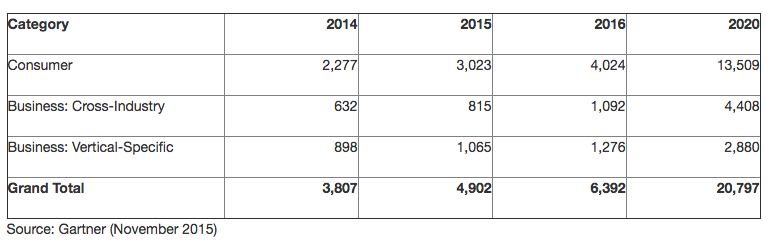
How Cloud Computing can Solve IoT’s Challenges
The growth of IoT will put a strain on the computing resources necessary to maintain the level of connectivity and data collection that IoT devices require. Cisco predicts that global machine-to-machine IP traffic will grow nearly sixfold from 1.6 exabytes (1 exabyte = 1 billion gigabytes!) per month in 2016 to 6.3 by 2020. Much of this will be attributed to IoT devices. Other issues, such as product development challenges, scalability, security, and more, will arise. How can you possibly deal with the level of resources needed to launch an IoT product? That’s where cloud computing can help. Below, we identify these challenges and offer insight into how the cloud helps resolve these issues.1) There are many technical hurdles to deploying an IoT solution; the cloud eases some of these burdens and accelerates development.
It’s not easy to launch an IoT solution. First, you have to worry about how your hardware or machinery will function. This can entail working with sensors, connecting the hardware to the internet, potentially dealing with battery life, and more. Then you have to develop the software to facilitate all of the communication and data collection. Finally, you have to deploy all of the back-end infrastructure to bring all of the moving parts of your IoT solution together. Cloud computing can help you deal with these technical issues. When you’re developing your IoT hardware and software, you don’t want to have to worry about setting up servers, deploying databases, configuring networks, and performing many other infrastructure tasks. Cloud computing providers have all of this ready at a moment’s notice. You can easily spin up virtual servers, launch a database instance, and create data pipelines to help run your IoT solution. What’s more, there are now services specifically dedicated to launching and managing IoT offerings. For instance, AWS’s IoT platform allows you to easily and securely connect devices to one another, manage these connections, and capture and feed collected data into other AWS technologies like S3 and Redshift for processing and analysis. Not only will this help speed up your development process, but it can also cut down on development costs. You won’t have to spend money upfront to purchase and provision servers and other infrastructure, and you’ll only pay for the resources that you consume. Because cloud computing providers already have all of the infrastructure that you need, they can help speed up your development process, get to market faster, and allow you to focus on building the best product possible.2) IoT devices can deliver massive amounts of data and use infrastructure resources in an inconsistent manner; the cloud can provide the scalability and flexibility to deal with this.
IoT traffic and the number of devices are set to erupt over the next few years, leading to increased interactions between devices and huge volumes of data generated. This means your business will need a cost-efficient way to store, process, and access data from your IoT solutions and scale resources to handle peaks of demand when necessary. With cloud computing, you can set up your infrastructure capacity to instantly scale up when usage increases and drop down when demand is lower. If you use traditional servers, you would have to buy enough capacity to account for peak times, which would then sit idle at times of low use and continue to subtract from your bottom line. Additionally, as you add more features into your IoT solution, you can easily scale the infrastructure to handle all of this functionality. Take John Deere for example. The agriculture giant is paving the way for farmers to leverage IoT to better understand their farms and be smarter about their output.
3) Data security will always be a concern in IoT; the cloud can help improve security for your solution.
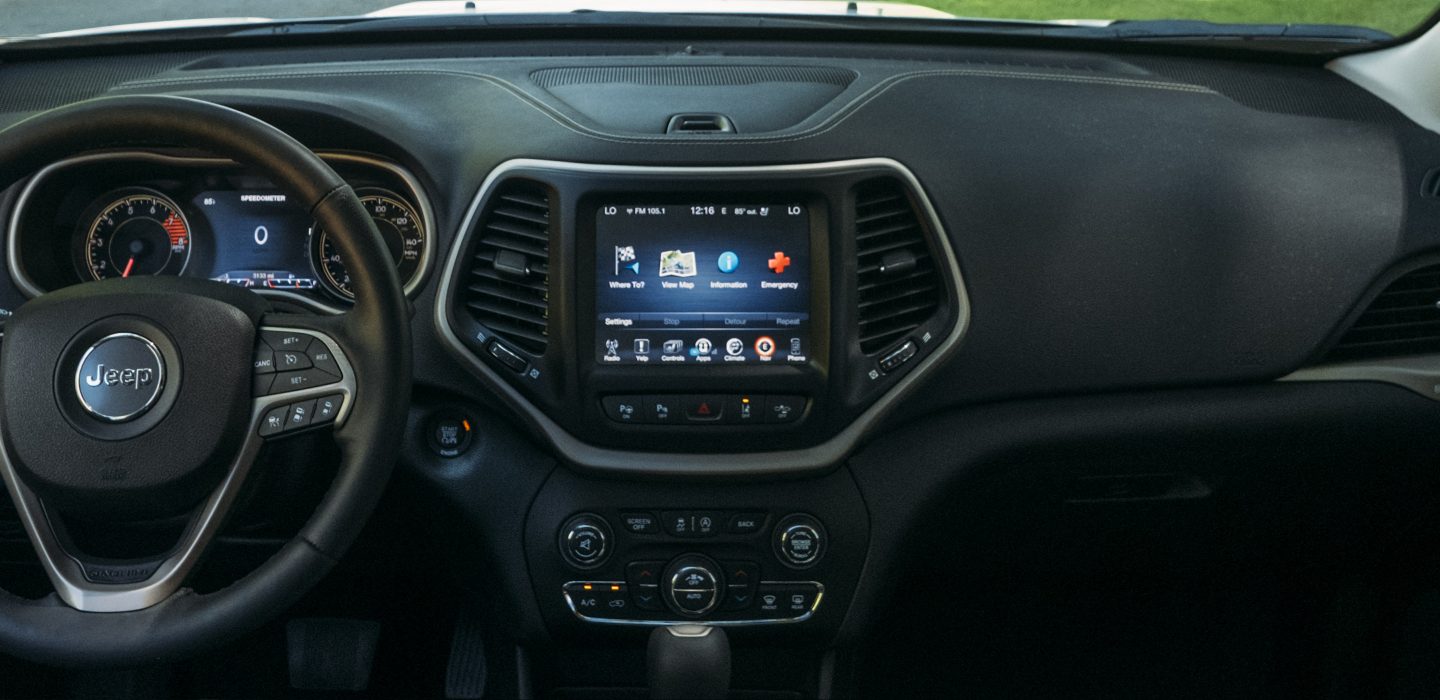
With the growth of the IoT industry comes plenty of security challenges. It’s already difficult to secure your employees’ computers, mobile phones, and other devices. Imagine how difficult it can be to secure thousands of other devices that are in the hands of unsuspecting users? Each of these devices can be the portal into the sensitive information of your customers, employees, and lines of business, and access to this data can lead to stolen identities, loss of money, and even bodily harm. Because many smart devices are interconnected, it may only take a breach at a single point to gain access to an entire IoT ecosystem. Scary. A few high-profile IoT security breaches have already occurred. Chrysler recalled 1.4 million Jeeps due to a security flaw, the Tesla Model S entertainment system was hacked, and up to 2.2 million BMW-built vehicles were susceptible to a breach that could let hackers unlock the cars’ doors. A hack of VTech’s Learning Lodge app store databases exposed the data of 6.4 million children. And a breach of digital video recorders and internet-connected cameras led to massive internet outages last October.