Vendor lock-in is a concern for those moving to the cloud. Here’s what you can do to mitigate the risks.
Migrating to the cloud can bring a multitude of benefits to your company, such as increased agility, flexibility, and cost savings. Despite all of these positives, many companies who are considering a move to the cloud have concerns. And one of the primary issues is vendor lock-in. When the foundation of your company’s IT is in the hands of an outside vendor, these concerns are valid. You might ask yourself these questions:- What if the cloud service provider’s (CSP) offerings don’t meet my needs?
- What if the CSP makes a major product change that doesn’t work for my business?
- What happens if the CSP goes out of business?
Causes of cloud vendor lock-in fears
Fears of cloud vendor lock-in stem from a number of places. First, it’s the loss of control over the data and infrastructure that power business’ applications. Not having complete control over aspects like security, uptime, and overall infrastructure management can be a scary thing. Next, it’s the dependence on a single vendor for so many critical needs. Your servers, data, networking, user management, and much more are in the hands of one company, so the dependence on your provider is huge. And if something goes wrong, it can be very detrimental to your business. Also, there may be fear that one cloud provider might not meet your current or future needs. Your CSP might fail to meet service level agreements or incur a data breach, and you’ll be forced to rethink your relationship. Even worse, the risk of that vendor going out of business is something you’ll have to account for. The difficulty and cost of switching to a new vendor looms large in every IT manager’s mind when deciding to move to the cloud and selecting a cloud service provider.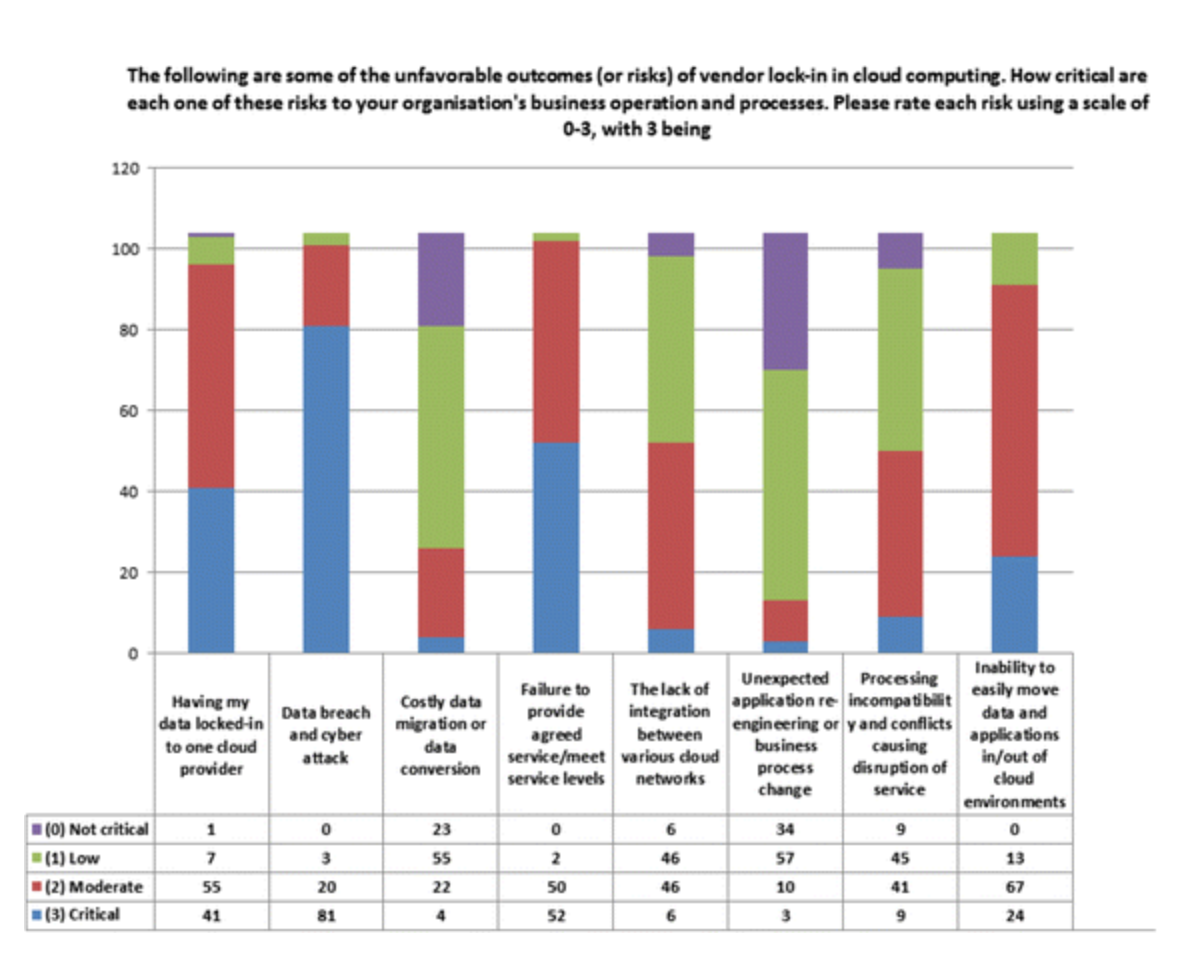
https://doi.org/10.1186/s13677-016-0054-z
Types of vendor lock-in risks
The issue with vendor lock-in is the difficulty in moving to another cloud service provider if something goes awry. You hope that this never has to happen, but it’s a possibility. There are four primary lock-in risks that you’ll take working with a single cloud provider. These include:- Data transfer risk
- Application transfer risk
- Infrastructure transfer risk
- Human resource knowledge risk
Data transfer risk
It is not easy to move your data from one CSP to another. A myriad of questions will arise during a data migration process, such as:- Who is responsible for extracting the data from the cloud databases and data warehouses?
- In what format will the data be? Will that format work with the new cloud provider, or will significant changes need to be made to the data?
- How can the data be transferred without loss of application functionality?
- How long will it take and how much will it cost to move all of this data?
Application transfer risk
If you build an application on one CSP that leverages many of its offerings, the reconfiguration of this application to run natively on another provider can be an extremely expensive and difficult process. For instance, let’s say you’ve developed a business intelligence platform on Microsoft Azure. You leverage basic cloud services like compute, storage, databases, and networking. But the app also includes Azure’s machine learning, data lake analytics, and bot services. Can you imagine all the changes you’ll have to make to your application if you had to move this to another CSP? One reason for this difficulty is a lack of standard interfaces and open APIs. Every CSP has their own proprietary specifications and standards, which make it very tough to move from one to another. Another reason is that technology and customer needs change so rapidly. You know first hand that your customers and partners continuously demand changes and improvements to your product. The faster that you add and edit features of your cloud-native application, the deeper entrenched you get with your CSP, and the tougher it will be to move to another cloud vendor.Infrastructure transfer risk
Every major CSP does things a little bit differently. Virtual machine formats and their associated pricing vary from vendor to vendor, making it difficult to ensure that you have the appropriate resource usage and cost savings if you switch providers. Database offerings and formats may differ as well. And one cloud provider may have more attractive offerings in certain infrastructure components, while lacking in other services that you may need. These differences in the underlying infrastructure result in difficulties moving from one cloud service provider to another.Human resource knowledge risk
If you’ve been working with a single CSP, your IT team has likely gained a lot of institutional knowledge about that provider’s tools and configurations. If you have to move your applications to another CSP, it will take time for your engineers to ramp up their knowledge of the new cloud platform. They’ll have to learn about new infrastructure formats, implementation processes, and more. Additionally, any newly required certifications will take a long time to earn. The knowledge risk is a factor that isn’t often thought about, but is just as important as the risks highlighted above.
Steps to take to avoid vendor lock-in
The risks that you take with having all your data, applications, and infrastructure with one cloud provider seem ominous. But there are a few things that you can do to ensure that your vendor lock-in risk is minimized.1) Do your due diligence
Before you select your CSP, you should thoroughly vet that they will give you everything that you need to run your applications reliably. Your CSP selection process should look something like this:- Determine your goals of migrating to the cloud
- Assess your current IT situation, including a thorough audit of your current infrastructure and cost and resources levels
- Select the type of cloud environment needed – public, private, or hybrid?
- Determine the specific cloud components necessary
- Choose the right cloud provider for your situation
2) Plan early for an exit
It’s kind of like a cloud pre-nuptial agreement. It might be weird to plan for an exit before you even “get married” to your cloud provider, but it’s an important step to protect your company in case things go south. While you plan your implementation strategy, include an exit plan and potential costs. And don’t plan out further than a couple of years; doing so may hamper your flexibility in migrating to another CSP if things go wrong.3) Design your application to be loosely coupled
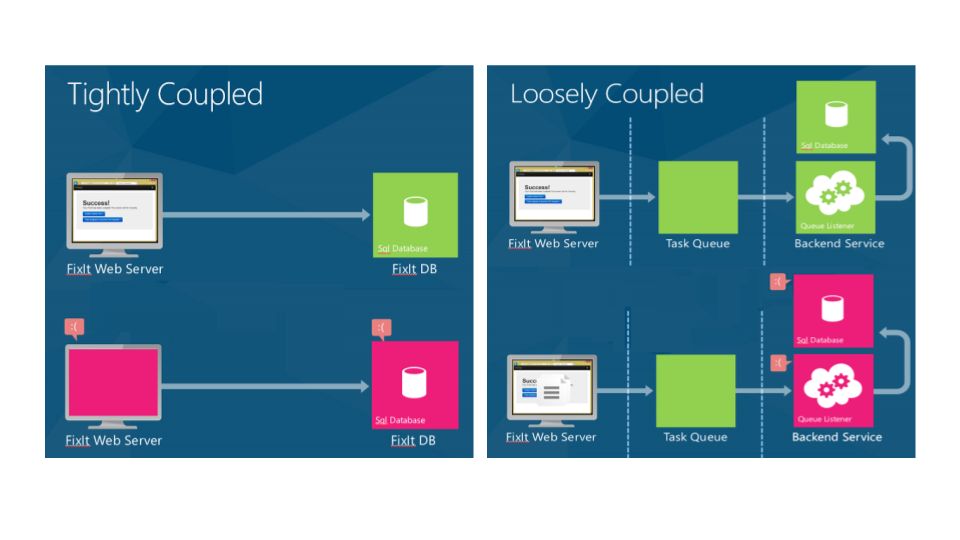
To minimize the risk of vendor lock-in, your applications should be built or migrated to be as flexible and loosely coupled as possible. Cloud application components should be loosely linked with the application components that interact with them. You can do this by incorporating REST APIs with popular industry standards like HTTP, JSON, and OAuth to abstract your applications from the underlying proprietary cloud infrastructure. Also, any business logic should not only be separated from the application logic, but should be clearly defined and documented. This will avoid the need to decipher business rules in case a migration to a new CSP occurs. Not only does this reduce the level of lock-in to a single vendor, but it also gives your application interoperability that’s required for fast migration of workloads and multi-cloud environments (more on this later).