This is post #2 in a series about the impact of mobile technology on the enterprise.
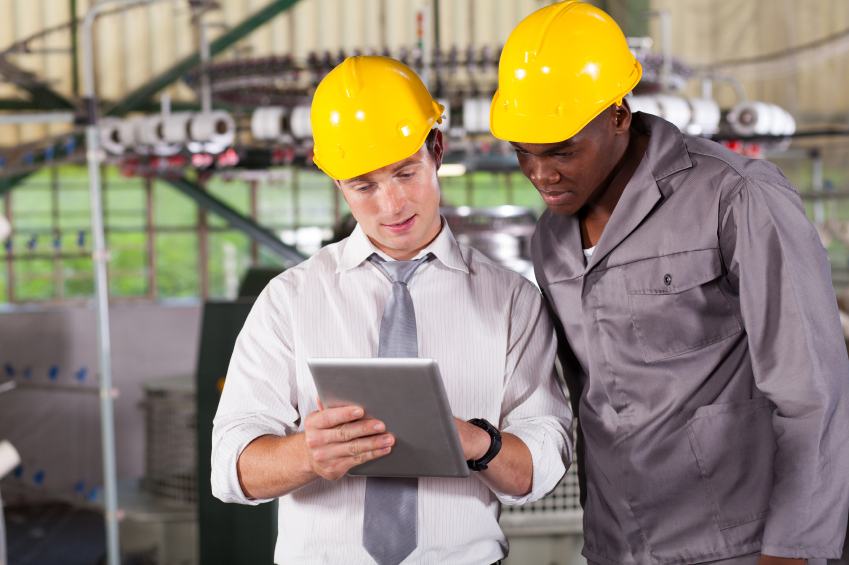
In my prior post about how mobile is changing the enterprise, I wrote about how mobile applications that help process-driven employees more effectively do their jobs are becoming more prevalent. The manufacturing industry is a prime example and is ripe to be hugely impacted by the mobility movement. This article will highlight why and how.
Benefits and Issues of Mobile in Manufacturing
The manufacturing industry, characterized by constantly moving materials and a focus on metrics like throughput and uptime, is a natural fit for mobile technology. The benefits of implementing mobility into industries like manufacturing are clear:
- Increased employee productivity
- Better resource management
- Faster decision making
- Complexity of the processes themselves – the reasons why mobile applications are such a good fit for manufacturing are also why they’ve been tough to implement
- Integration of mobile apps within the infrastructure of plants and warehouses – dealing with human/machine interfaces adds a layer of complexity
- Connection to back-end systems – linking smartphone applications with the large enterprise resource planning (ERP) systems these companies use to run their businesses may be technically difficult
Mobile and Lean Manufacturing
In lean manufacturing, people and other resources such as machines, parts, and product inventory are in constant motion to maximize efficiency, which makes it an excellent use case for role-based mobile applications.
Instead of developing a single, complex mobile application that encompasses the entire manufacturing process, simpler mobile applications can be built specifically for each type of employee. For instance:- Workers responsible for running a lathe can access schedule and uptime data and possibly even start and stop machinery with a mobile app.
- Production schedulers can obtain data about the location and amount of parts on hand, analyze material flow, and implement Kanban more effectively.
- Logistics workers can optimize routes and track package locations on the go.
- Floor supervisors are armed with time and attendance data, ensuring effective management of their workers.
- Maintenance workers can access parts information and interactive repair guides when fixing machines.
- Safety workers can use the camera and location-based functionality of smartphones to report health, safety and environmental incidents.
- Machines can be wirelessly connected so they can essentially talk to each other and facilitate real-time data sharing.
- Many other manufacturing roles can be positively impacted by mobile applications.